
 Certificate in Client Care Services
WRITTEN BY:
NATALIE WOOLLEY
BTrngDev, DipVET, DipVN (ECC & Surgical), ISFM AdvCertFB, Cert IV (VN & CGC), TAE, MHFA, RVN
PUBLISHED: 25 MARCH 2026

Canine ehrlichiosis is a serious tick-borne disease of dogs caused by the bacterium Ehrlichia canis. This is an emerging biosecurity threat that is spread by the brown dog tick and can cause fever, bleeding disorders, immune suppression and even death if untreated.
First detected in Australia in 2020, this serious tick-borne disease has spread across large areas of the country and is now considered established in many northern regions. For veterinary professionals, animal care workers and students entering the industry, understanding ehrlichiosis is essential for protecting animal health and supporting responsible pet ownership.
This article explains what canine ehrlichiosis is, how it spreads, the symptoms to watch for and how veterinary teams help prevent and manage this disease.
Understanding diseases such as ehrlichiosis is an important part of veterinary nursing training and highlights the role nurses play in disease prevention and client education.
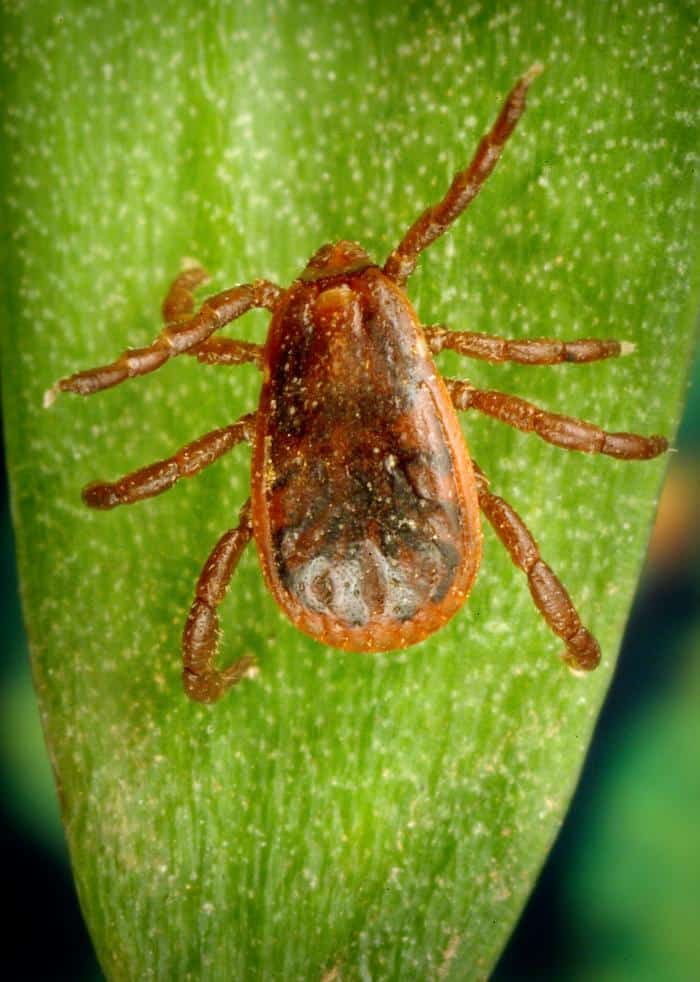
Rhipicephalus sanguineus
Public Domain, https://commons.wikimedia.org/w/index.php?curid=688291
What is canine ehrlichiosis?
Canine Ehrlichiosis, also called canine monocytic ehrlichiosis (CME) is a tick-borne infectious disease, caused by the gram-negative bacteria ehrlihcia canis.
The disease is transmitted by the common ‘brown dog tick’ (Rhipicephalus sanguineus, specifically the Rhipicephalus linnaei) (Muhammad et al. 2024), which thrives in warm tropical and subtropical climates (like the northern parts of Australia) and can survive inside homes and kennel environments. Globally it is found in USA, Asia, Africa and the Mediterranean.
When a dog is bitten by a tick carrying ehrlichia canis, the bacteria invades and multiplies within the dogs’ monocytes, a white blood cell. The infection spreads from these cells into multiple body systems, resulting in the range of clinical signs seen in dogs. Without treatment, the disease can become severe and fatal.
Canine Ehrlichiosis in Australia
The disease was first seen in Australia in May 2020, with infected dogs identified in Western Australia and Northern Territory (Department of Agriculture, Fisheries and Forestry 2025b). Prior to this the disease was not known to exist in Australia, and it was declared a notifiable disease where Veterinarians were required to report suspected or known cases to monitor the spread and attempt to eradicate it from land. However, the prevalence of the brown dog tick across much of Australia acted as a vector for rapid transmission of disease, and once canine ehrlichiosis was introduced, it rapidly became widespread and declared endemic by 2024 and subsequently removed from the national notifiable disease list (Australian Veterinary Association 2023).
Today Canine Ehrlichiosis is well established in northern and central parts of Australia, with native cases reported in Northern Territory, northern South Australia, northern Western Australia, northern Queensland.
Cases of disease in travelling pets have been identified in NSW and Victoria, with Tasmania remaining to only canine Ehrlicihiosis free state in Australia. There are biosecurity travel restrictions on dogs travelling to Tasmania because of this (Natural Resources and Environment Tasmania 2024)
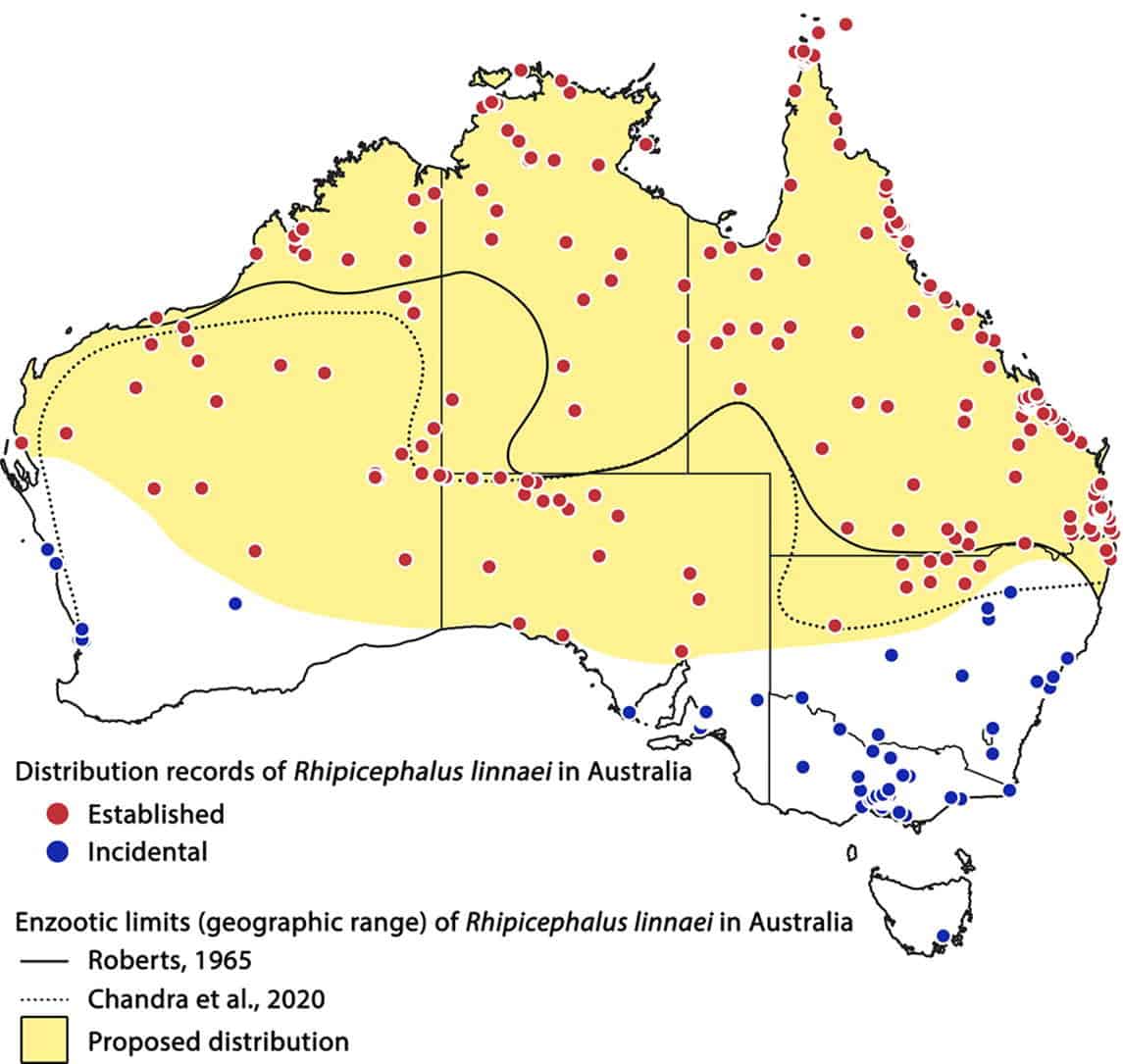
Distribution of Ehrlichia canis infection. Source: Muhammad et al. (2024).
How does infection in dogs occur?
Infection occurs when ticks, carrying the ehrlichia canis bacteria, bite dogs and transfer the bacteria via saliva. Ticks acquire the bacterium through biting infected dogs.
The brown dog tick, unlike other tick species can complete its whole lifecycle indoors, making kennels, shelters, and homes potential high-risk environments for infestation and disease transmission.
Once the bacteria enters the dogs tissue, it rapidly moves into the bloodstream and lodges in monocytes and other haemopoietic tissue such as the spleen and bone marrow where it replicates.
Infection can also occur through blood transfusions if donor dogs are carriers themselves and improperly screened. This highlights the importance of using screened and tested blood products and ensuring all donor animals are healthy, on tick preventatives and clear from known diseases.
(Department of Agriculture, Fisheries and Forestry 2025a).
Can other pets get ehrlichiosis?
All animals in the canidaie species are susceptible to infection. In Australia this includes dingoes, foxes and all breeds of dogs. This means any environments where brown dog ticks and these animals cohabitate are at risk for canine ehrlichiosis transmission.
Any infected animal can act as a carrier of disease and may still transmit it to ticks in the absence of clinical signs of infection.
Can humans catch ehrlichiosis from dogs?
In short, no. Dogs cannot directly transmit canine ehrlichiosis to people. The ticks, however, can and do bite humans, and can transmit the disease to us (Snowden and Simonsen 2024), highlighting the importance of tick population controls to protect both people and dogs.
For people living in endemic tick areas where this is a known risk of canine ehrlichiosis should wear long sleeves and pants when in bush land, use insect repellents and ensure any dogs they have are on appropriate preventative products.
Clinical signs of canine Ehrlichiosis infection
Ehrlichiosis typically progresses through three stages of disease, although not all dogs experience every stage, so a holistic understanding of the clinical signs is important to have.
Acute Stage (3 – 4 weeks)
The clinical signs of the acute stage usually develops after a 1–3 week incubation period after infection has occurred, and may last several weeks.
During this phase, dogs may show signs such as:
- fever
- lethargy
- lymphadenopathy
- thrombocytopenia
- reduced appetite
- petechiae, epistaxis
- uveitis
Some dogs recover during this stage, especially if treatment begins early. Others will become asymptomatic carriers and others will progress to the chronic form of disease.
Subclinical Stage (month to years)
Following the acute stage, many dogs enter a subclinical phase, where they show no overt signs of infection.
During this stage the dog may appear completely healthy, even though the bacteria remain present in the body.
This phase can last months or even years, highlighting the importance of tick prevention for disease control.
Dogs may still at as a reservoir the infection and can be carriers for the disease, aiding the spread if they are bitten by ticks. There is little information on how many subclinical dogs go on to develop the chronic form of ehrlichiosis.
Chronic Stage (months to years)
In some dogs the disease progresses to a severe chronic stage.
This stage can cause significant damage to the immune and haemopoietic systems, leading to:
- severe anaemia
- bleeding disorders
- neurological symptoms
- weakness or collapse
- organ failure
Chronic ehrlichiosis can have a poor prognosis and is often fatal, especially if diagnosis and treatment are delayed.
Australia has a higher mortality outcome even in the acute stages as our dog population is immunologically ‘naïve’ to the disease, resulting in increased morbidity and susceptibility.
How is Canine Ehrlichiosis Diagnosed?
Ehrlichiosis is diagnosed by combining clinical history, physical examination and laboratory testing. Veterinary nurses play a key role in accurate history collection, and many owners are more willing to chat to nurses about recent travel, holidays, visitors or lapses in preventative care than they are with a vet. Nurses provide a safe and supportive environment for sharing experiences in difficult times. This can be a huge asset in the diagnosis phase.
Important clues often include:
- recent travel to high-risk regions
- exposure to ticks
- poor tick prophylaxis compliance
- compatible clinical signs
Diagnostic tests may include (Australian Veterinary Association 2023):
- PCR testing, which detects the DNA of Ehrlichia canis in patient blood samples. Samples are sent to external laboratories and results are usually returned within a week.
- ELISA tests that detect antibodies to the bacteria in patient blood samples. This is available as an in-house test on the IDEXX SNAP 4Dx Plus test
- IFAT serology test a test that allows antibodies to specific antigens to be visualised under UV light. Samples are sent to eternal laboratories and results are usually available within 1 week.
Routine blood tests may also reveal abnormalities such as thrombocytopenia or anaemia, which commonly occur in infected dogs.
Treatment
The primary treatment for canine ehrlichiosis infection is a several weeks long course of doxycycline, a broad-spectrum antibiotic that is effective against gram positive and negative bacteria. The ehrlichia canis bacteria, being gram negative is sensitive to doxycycline. Doxycycline is a bacteriostatic antibiotic, meaning it stops bacteria from multiplying. This then allows the dog’s immune system to eliminate the infection.
Supportive care adjuncts the primary treatment with intravenous fluids – including blood transfusions where significant anaemia exists, analgesics to manage pain, nutritional support and sort bedding to minimise bruising associated with thrombocytopaenia.
In cases where doxycycline is ineffective, new trials show that Rifampicin has been useful in clearing infections, however this is an off-label use – as the drug is not registered for use in pets (Department of Agriculture, Fisheries and Forestry 2025b). This should only be considered in extreme circumstances where doxycycline fails to reduce infection and severe clinical signs persist, as it is one of a few antibiotics we can use in cases of Multi Drug Resistant strains of staphylococcus. Rifampicin is a bactericidal antibiotic that inhibits RNA transcription and kills the bacterial cell.
With prompt diagnosis and treatment, infected dogs can recover from canine ehrlichiosis. However, those with chronic forms of the disease may persist with life-long complications such as chronic bone marrow suppression and subsequent chronic anaemia, leukopenia and thrombocytopenia; persistent bleeding disorders; immune dysfunction, neurological disorders and chronic uveitis.
How can we prevent canine Ehrlichiosis in our pets?
Currently there is no vaccination for canine ehrlichiosis, so prevention relies on prophylaxis treatment and owner education to manage tick burdens and bites.
The best strategies are:
- Appropriate continuous tick prevention – products that kills ticks on contact (collars and spot on treatments)
- Some resources and regions where brown dog ticks are ubiquitous encourage a second level of cover with an oral treatment that kills ticks if they bite* as well
*this will not reduce the risk of infection in the bitten dog but can help reduce the tick being a future vector
- Some resources and regions where brown dog ticks are ubiquitous encourage a second level of cover with an oral treatment that kills ticks if they bite* as well
- Start travelling pets on tick prevention before they enter tick areas
- Regular tick inspections
- Treat and clean bedding, yards and homes regularly
What do I need to know as a nurse?
Ehrlichiosis can be considered a silent disease. Its subclinical phase and its new emerging status mean there is poor community awareness of it in Australia and many pet owners will not understand the risks. As a veterinary nurse, you play an important role in raising awareness on ehrlichiosis and educating pet guardians on the minimum prophylaxis to help keep the pet communities safe and manage the spread of the disease.
In clinical practice this means:
- Education on locations and areas that have endemic tick populations or high-risk travel destinations
- Confirm travel plans or history to better assess the risk profile of any animal or family
- Determine tick exposure risk
- Clarifying preventative history/prophylaxis – including multimodal strategies to both kill ticks on contact and kill ticks that bite.
- Educate on disease transmission factors and subclinical /other species carriers
- Convey Infection prevention and control principles
- Discuss recognition of early signs of infection
Take home message
Ehrlichiosis is a tick-borne disease that affects dogs, dingoes and foxes in Australia. It is spread to our pet dog populations by brown dog ticks, and death can occur months to years after the point of infection. In Australia it had a higher morbidity and mortality rate due the population exposure naivete.
While there is no vaccine available, the disease is largely preventable through effective tick control and early veterinary intervention.
Community education and professional stewardship will help reduce the rates of infection in Australia.
Tasmania is currently canine ehrlichiosis free – so biosecurity travel restrictions exist to maintain this. All pets travelling to Tasmania must be tick free – use prophylaxis BEFORE travel.
For veterinary nurses, animal care workers and students entering the profession, understanding emerging diseases like ehrlichiosis is an important part of supporting animal health and responsible pet care.
FAQ
What is the risk or canine ehrlichiosis to pets in Australia?
The risk of infection is highest in northern Australia where brown dog ticks are common, including the Northern Territory, northern Western Australia and northern Queensland. Animals living in, travelling to or from these areas should have tick prevention applied.
Why is Tasmania free of ehrlichiosis?
Tasmania does not have an endemic brown dog tick population, so is free of the disease as this time. Strict biosecurity controls prevent infected ticks entering the state.
Can ehrlichiosis be cured?
Many dogs recover when treated early with doxycycline, but dogs that develop chronic disease may suffer long-term complications or even death. In Australia there is a higher morbidity and mortality rate as the disease is novel to our animals.
Is ehrlichiosis fatal?
If untreated, ehrlichiosis can progress to severe anaemia, bleeding disorders and organ failure.
Ehrlichiosis is a tick-borne disease that affects dogs, dingoes and foxes in Australia. It is spread to our pet dog populations by brown dog ticks, and death can occur months to years after the point of infection. In Australia it had a higher morbidity and mortality rate due the population exposure naivete.
While there is no vaccine available, the disease is largely preventable through effective tick control and early veterinary intervention.
Community education and professional stewardship will help reduce the rates of infection in Australia.
Tasmania is currently canine ehrlichiosis free – so biosecurity travel restrictions exist to maintain this. All pets travelling to Tasmania must be tick free – use prophylaxis BEFORE travel.
For veterinary nurses, animal care workers and students entering the profession, understanding emerging diseases like ehrlichiosis is an important part of supporting animal health and responsible pet care.
References and further reading:
Australian Veterinary Association (2023) Ehrlichia canis is no longer nationally notifiable. Available at: https://www.ava.com.au/member-updates/qld/ehrlichia-canis-is-no-longer-nationally-notifiable/ (Accessed: 12 March 2026).
Department of Agriculture, Fisheries and Forestry (2025a) Ehrlichiosis in dogs. Australian Government. Available at: https://www.agriculture.gov.au/biosecurity-trade/pests-diseases-weeds/animal/ehrlichiosis-in-dogs (Accessed: 12 March 2026).
Department of Agriculture, Fisheries and Forestry (2025b) Ehrlichiosis: additional veterinary guidelines for managing CME in Australia. Australian Government. Available at: https://www.agriculture.gov.au/biosecurity-trade/pests-diseases-weeds/animal/ehrlichiosis-in-dogs/veterinarians (Accessed: 12 March 2026).
Muhammad, A., Khan, M., Rashid, I. and Zahid, H. (2024) Canine monocytic ehrlichiosis: epidemiology, pathogenesis and clinical management. International Journal for Parasitology. Available at: https://www.sciencedirect.com/science/article/pii/S0020751924000742 (Accessed: 12 March 2026).
Natural Resources and Environment Tasmania (2024) Importing dogs into Tasmania. Tasmanian Government. Available at: https://nre.tas.gov.au/Documents/Importing_dogs.pdf (Accessed: 12 March 2026).
Snowden, J. and Simonsen, K.A. (2024) Ehrlichiosis. In: StatPearls. Treasure Island (FL): StatPearls Publishing. Available at: https://www.ncbi.nlm.nih.gov/books/NBK441966/ (Accessed: 12 March 2026).
About the author: View Natalie Woolley expert profile, qualifications and all articles
