Are you a current student?

 Certificate in Client Care Services

ACM40418 Certificate IV in Veterinary Nursing
Study the nationally recognised
ACM40418 Certificate IV in Veterinary Nursing online
apply now for free


Module PRICES FROM:
$2050 or
$250/month
OR

ENROLMENTS FOR NEXT INTAKE CLOSE IN:
ENROLMENTS & INTAKES
- Intakes start monthly, beginning on the first Monday.
- Enrolments close on the 15th day of the month prior unless filled early.
- Places are limited each month. If an intake is full, you’ll automatically be placed in the next available intake.
DON’T WANT TO WAIT?
- !! Immediate Course Start: !! Pay your tuition in full and start your studies the following business day! No waiting for the next intake.

Duration:
Full Course: 2 years + 3 months for study breaks (+ extend 2yrs)
Modules: 12 months each (+ extend 12mths)

language:
English

Online Learning Centre:
Yes

Printed Learner's Guides:
Yes

Need to attend campus:
No

Schedule type:
Flexible. Study when it suits you.

OPTIONAL ONLINE STUDY GROUPS
Yes

Not sure if this is the right course for you?
Answer a few easy questions and find out in less than a minute.
find out nowbuild the clinical skills required to work as a veterinary nurse in Australia.
The ACM40418 Certificate IV in Veterinary Nursing is Australia’s nationally recognised qualification for veterinary nurses, and is the qualification most Australian employers expect when hiring.
Designed to build real-world clinical nursing skills alongside gaining your qualification, this course prepares you for the full scope of veterinary nursing practice.
Veterinary nursing is hands-on, fast-paced, and incredibly rewarding. You’ll be supporting vets, caring for sick and injured animals, and helping clients through some of the most emotional moments of pet ownership. Veterinary nurses are the backbone of every veterinary clinic.
No two days as a veterinary nurse are the same. One day you may be in surgery monitoring anaesthesia, preparing sterile instruments, and supporting post-operative recovery. The next, you’re in the hospital ward administering medications, monitoring vital signs, and providing comfort to patients in critical care.

And it’s not just animals. Veterinary nurses are the face of the clinic too. You’ll be assisting with consults, scheduling appointments, providing animal care advice, and supporting clients through some of the most emotional moments of pet ownership.
Not in a clinic yet? If you have a clinic willing to take you on for placement, you can enrol now. If you’re still arranging placement, ACVN offers structured pathway options to help you start your vet nursing journey and meet the entry requirements along the way
Veterinary Nursing is a rewarding job where no two days are the same.

ACVN’s ACM40418 Certificate IV in Veterinary Nursing is Australia’s most comprehensive veterinary nursing course.
When you graduate, you’ll be recognised for your clinical skills and your ability to provide a high standard of care.
Study your way — enrol in the full course as one structured program, or work through the qualification module by module to spread your study over a longer period.
Either way, once you complete the Foundation Module, you choose the order of your remaining modules to shape your own learning pathway.
The ACM40418 Certificate IV in Veterinary Nursing is the industry-standard qualification for veterinary nurses in Australia — and in Western Australia, it is required to be eligible for registration.
You’ll complete this qualification while working in a veterinary clinic, either through employment or a structured placement. This means you’re building real clinical skills from day one. By the time you graduate, you’ll have the knowledge and confidence to support veterinarians, advocate for your patients, and work effectively across surgery, hospital nursing, reception, and client education.

This course is highly detailed and clinically focused — current students frequently find themselves applying their new knowledge to adapt clinic protocols within just a few months of study.
Written and delivered by highly knowledgeable and skilled Veterinary Nurse Educators, it equips you with everything you need to become an outstanding nurse: an asset to your clinic and the best possible advocate for your patients.
ACVN has been training future veterinary nurses since 2010 and is proudly owned and operated by Australian veterinary nurses.
EMPLOYED NURSES
If you are employed as a veterinary nurse already, you must:
- Be 18 years or older
- Employed in a veterinary practice 7.5 hrs (1 day) per week on average
- Have an ACM20121 Certificate II in Animal Care OR ACM30122 Certificate III in Animal Care Services (Animal Care), OR other equivalent animal care qualification or higher OR have equivalent experience and knowledge of someone holding a Cert II in Animal Studies (in which case, you will need to complete an Application for Direct Entry and provide associated evidence).
PLACEMENT NURSES
- Be 18 years or older
- Have an ACM20121 Certificate II in Animal Care OR ACM30122 Certificate III in Animal Care Services (Animal Care), OR other equivalent animal care qualification or higher
- Have a clinic willing to take you on for placement — at least 7.5 hrs (1 day) per week on average across your enrolment. Ongoing weekly hours or block placements are both fine, as long as the total hours are covered.

WHAT IF I AM NOT ELIGIBLE?
We’ve specifically designed the ACM30122 Certificate III in Animal Care Studies so that it covers almost the first 12 months of the ACM40418 Certificate IV in Veterinary Nursing — meaning your study counts twice.
Once you’ve completed it, you can enrol directly in the ACM40418 and complete the second year to become a fully qualified veterinary nurse
LEARN MORE ABOUT THE PATHWAY TO BECOMING A VET NURSEACM40418 Certificate IV in Veterinary Nursing
For this qualification to be awarded, you must complete 21 units of competency. Seventeen of these are core units, and the remaining four are electives. Electives are set within our course structure and you will not be able to change these.
The core units you will cover within your subjects are:
- ACMGAS307 Identify animal anatomy and physiology for animal care work
- ACMGAS308 Communicate effectively with client and team members
- ACMVET202 Carry out daily clinic routines
- ACMWHS301 Contribute to work health and safety processes
- ACMINF301 Comply with infection control policies & procedures in animal work
- ACMVET401 Coordinate veterinary reception duties
- ACMVET402 Apply imaging routines
- ACMVET403 Perform clinic pathology procedures
- ACMVET404 Perform practice office procedures
- ACMVET405 Coordinate and perform surgical nursing routines
- ACMVET406 Nurse animals
- ACMVET407 Carry out medical nursing routines
- ACMVET408 Provide nutritional support for animals
- ACMVET409 Provide specific animal care advice
- ACMVET410 Carry out veterinary dental nursing procedures
- ACMVET413 Prepare for anaesthesia and monitor animal anaesthesia and analgesia
- ACMVET416 Assist with the preparation of veterinary drugs and poisons
Your electives are:
- ACMBEH301 Identify behaviours and interact safely with animals
- ACMGEN304 Promote positive wellbeing in self and others in animal care workplaces
- ACMSPE305 Provide basic care of domestic cats *
- ACMSPE304 Provide basic care of domestic dogs
* For Modular Enrolment only:
In place of ACMSPE305 the following unit is offered:
- ACMSUS401 Implement and monitor environmentally sustainable work practices
Enrolling is very simple!

- Click on the ‘Apply Now’ button below.
- Fill out the form and provide the documents to support your application.
- A Nurse Educator will review your application and then email you your acceptance package with all the necessary information. This may take a few days, but if you haven’t heard back from us within a week, contact us!
- Submit your enrolment form and make payment.
Once your enrolment and payment have been processed, you will receive an email from us with all the information you need to access the Learning Centre. Once you have completed the student induction module, we’ll send your learners guide folders out.
apply now for freeNationally Recognised Training


This qualification is delivered by ACVN on behalf of the University of Queensland, trading as UQ Skills, RTO ID: 1511. For more information refer to the FAQ.

This qualification is delivered by ACVN on behalf of the Halo Nation Training Pty Ltd, trading as HaloNT, RTO ID: 32485. For more information refer to the FAQ.
Frequently asked questions
How is the course delivered?
The course is delivered entirely by distance education using our online ‘Learning Centre’. You’ll receive printed learner’s guides and will need to purchase a couple of textbooks.
This allows you the flexibility to study when it suits your schedule. You won’t need to attend any on-campus classes. We’ve designed the course to fit around your work and lifestyle. Many of our students work full time in addition to their study.
Once the course starts, you’ll receive printed learner’s guides, which will guide you through your studies and prepare you for assessments. You’ll also have access to the extra study resources available via our ‘Learning Centre’ online and can contact us for help when you need it. You can submit assignments through this portal, too.
Each subject contains various assessment tasks:
-
- Expect to complete written assessments like assignments, case studies, projects, and reports.
- Multiple choice questions are in our learning activities so you can check your learning as you progress through the course.
- Workplace-based assessments for practical skills will be completed at the clinic in which you work or at your placement clinic. These will include completing skills log books and some video assessments. Don’t stress, we provide full instructions for the practical assessments so you know what to include.
- On average, expect to submit one short assessment task each week to keep on track.
How long will the course take, and how much study will I need to do?
If you enrol in the full course, you will complete your ACM40418 Certificate IV in Veterinary Nursing over 2 years + 3 months for study breaks. If you choose the modular enrolment method, then you will be given 12 months to complete each module (so 4 years in total for the entire course).
Generally, most students dedicate approximately 10 hours per week to your studies, completing assessments and undertaking the required reading. This is in addition to your clinical hours.
We’ll provide you with a study schedule so you can keep on track to finish without requiring an extension.
Please note:
Additional fees apply if you want to extend your study and you can extend for a maximum of 24 months if enrolled in the full course, or 12 months if enrolled in a module.
If the training package updates whilst you are still completing your study, you may be required to transition to the new qualification. There is always at least 12 months notice of this happening.
What happens if I need more time to complete the course?
You will be given 2 years + 3 months for study breaks to complete your full course. If you enrol in the module method, then you will be given 12 months to complete the module. There are 4 modules to complete to graduate.If you need more time, that’s ok! Arranging an enrolment extension is easy, however, be aware that it attracts a fee.
We do provide a study schedule that if you follow, you will finish within your normal enrolment period.
Will my previous experience or study count?
Yes, it can. We can take into account the knowledge and skills you’ve already gained through your previous education and work, including:
- Formal or informal training
- Paid or unpaid work experience
- Credit transfers if you hold equivalent units from other study.
Please speak to us to gain recognition for your previous studies and work skills.
Your previous studies may also count as credits towards your new qualification. If so, you’ll be entitled to a lower course fee (depending on units of competency completed).
To claim a credit transfer, please include transcripts of your previous qualifications with your application form. We will then advise you of any adjustments to your course fee.
Certified copies will need to be supplied when you enrol for the credits to be officially granted.
I have credits from other qualifications or study. What do I do?
If you have completed units of competency elsewhere relevant to your ACM40418 Certificate IV in Veterinary Nursing, we will apply these credit transfers to your course.
You will not be required to pay for enrolment in these units. However some of our subjects cover more than one unit of competency, so you may find you’ll need to pay for and complete an associated subject.
If you’ve already completed an ACM20121 Certificate II in Animal Care or ACM30122 Certificate III in Animal Care Services (Animal Care), or commenced your ACM40418 Certificate IV in Veterinary Nursing with another training organisation, it’s vital you supply us with a copy of your transcript as part of your application. This will allow us to give you an accurate price and tell you exactly what units and subjects you’ll need to complete. A certified copy of the transcript must be supplied with your enrolment for the credits to be applied.
If you have credit transfers, secure your place with the deposit of $950 with enrolment. Then we will adjust your further instalments to suit your study and remaining course cost.
Please note: The ACM40412 Certificate IV in Veterinary Nursing qualification is not the equivalent of the ACM40418, and many of the units are not credit transfers, even if the unit name is similar. This is set at the training package level and applies to all providers.
Do I need an ACM20121 Certificate II in Animal Care before I study the ACM40418 Certificate IV in Veterinary Nursing?
No. You can have a higher qualification such as an ACM30122 Certificate III in Animal Care Services or other related animal care or sciences qualification, including overseas qualifications.
If you have been employed as a veterinary nurse for over 12 months, and do not hold at least a Certificate II level qualification, please phone us to discuss your options. We may still be able to accept you on the course if you have the equivalent knowledge of someone with a Certificate II qualification and can demonstrate this.
I don't work in a veterinary clinic. Can I still take this course?
YES! We accept placement students on this course and cover you will insurance whilst you are studying. You do need to have placement arranged prior to enrolling.
If you do not yet have placement arranged, we offer some pathway options that may suit you.
What if I’m already an experienced Vet Nurse?
If you’ve been working in a practice for at least 12 months as a veterinary nurse, then we may still be able to accept you onto the course as long as you can demonstrate you have the equivalent knowledge and skill of someone who has completed a Certificate II.
If you have more than 5 years of experience as a veterinary nurse, we suggest you consider the ACM40418 Certificate IV in Veterinary Nursing via RPL FastTrack.
This program assesses your prior learning both on the job (called Recognition of Prior Learning or RPL) and through continuing education. It’s a quicker way for you to gain qualifications for the experience and skills you already possess.
Please note:
FastTrack is NOT a course and no learning resources are provided. If you want to learn more, we suggest a combination of RPL and formal study.
The program is designed so you can demonstrate that you already have the necessary knowledge and skills gained from working as a Veterinary Nurse.
You’ll still need to complete some written assignments, video assessments and examples of work from the clinic.
For more information, please visit our ACM40418 Certificate IV in Veterinary Nursing via RPL FastTrack page.
Do you take international students?
Yes! We welcome offshore international students. That is, you’re not in Australia on a study visa.
As an international student, we enrol you on our ACVN Diploma of Clinical Veterinary Nursing. Once you graduate from that, we can issue you with a ACM40418 Certificate IV in Veterinary Nursing via RPL for a small fee if you require both certifications. The Diploma is taught at a higher level than the Cert IV and better suits most international students.
learn more about the diplomaThere are a few considerations for international students. The most important one is, is it legal for you to perform veterinary nursing tasks in your home country, as we do require you to complete specific practical assessments. This is usually only an issue in countries like the UK and South Africa where there are registration requirements for VNs.
learn more about being an international student
What can I study after this certificate?
After achieving this qualification candidates may undertake:
- Certificate in Professional Veterinary Nursing
- Advanced Certificate of Professional Veterinary Nursing
- ACM50212 Diploma of Veterinary Nursing (Surgical Nursing)
- ACM50412 Diploma of Veterinary Nursing (Emergency & Critical Care)
- ACM50512 Diploma of Veterinary Nursing (General Practice)
- Bachelor of Veterinary Technology at university
Is there government funding for this course?
No, unfortunately there is no government funding for our course at this time.
You can enrol with one of our easy interest-free payment plans.
We do encourage you to contact your local job seeker service or apprenticeship centre for further suggestions as well.
About The University of Queensland, trading as UQ Skills, RTO ID: 1511
Veterinary Nurse Solutions, trading as the Australian College of Veterinary Nursing (‘ACVN’), has a third party arrangement with UQ Skills which is a Registered Training Organisation (RTO). UQ Skills is a business within the University of Queensland under the Faculty Science. In this arrangement, UQ Skills is the ‘Principal RTO’.
For more information about our third party partner UQ Skills, go to:
https://uqskills.uq.edu.au/about-uq-skillsor
https://training.gov.au/Organisation/Details/1511
At all times, the Principal RTO is responsible for the quality of the training and assessment you will receive in compliance with Standards for RTOs 2015, and for the issuance of the Australian Qualifications Framework (AQF) certification documentation. These Standards set out the requirements that an organisation must meet in order to be an RTO and ensure the integrity and quality of nationally recognised training provided by registered training organisations.
What does this mean for students?
Who are students enrolled with?
Students are enrolled with UQ Skills as the principal RTO.
Who do students do training and assessment with?
All training is conducted by ACVN on behalf of UQ Skills, the principal RTO. All learning and assessment materials are developed by ACVN and approved by UQ Skills.
Who do the trainers and assessors work for?
All trainers and assessors are employed by ACVN, but are approved by UQ Skills.
What if a student needs to make a complaint?
In the first instance you can provide feedback and make a complaint directly to us, ACVN at [email protected]. You are also able to make a complaint or provide feedback directly to the Principal RTO, UQ Skills directly, at: [email protected].
Who issues qualifications and statements of attainment?
On successful completion of all course requirements students are provided with the appropriate qualifications and statements of attainment issued by the Principal RTO, The University of Queensland, trading as UQ Skills, RTO ID: 1511.
What if a student needs to have a qualifications or statement of attainment reissued?
Students can contact either ACVN and we can assist you to organise this. You are also able to directly contact UQ Skills to obtain a new copy of a certificate.
About Halo NT, RTO ID: 32485
Veterinary Nurse Solutions, trading as the Australian College of Veteinary Nursing (‘ACVN’), has a third party arrangement with Halo Nation Training Pty Ltd (‘HaloNT’) which is a Registered Training Organisation (RTO). In this arrangement, HaloNT is the ‘Principal RTO’, and ACVN are offering the qualification on their behalf.
At all times, the Principal RTO is responsible for the quality of the training and assessment you will receive in compliance with Standards for RTOs, and for the issuance of the Australian Qualifications Framework (AQF) certification documentation. These Standards set out the requirements that an organisation must meet in order to be an RTO and ensure the integrity and quality of nationally recognised training provided by registered training organisations.
What does this mean for students?
Who are students enrolled with?
Students are enrolled with HaloNT as the principal RTO.
Who do students do training and assessment with?
All training is conducted by ACVN on behalf of HaloNT, the principal RTO. All learning and assessment materials are developed by ACVN and approved by HaloNT.
Who do the trainers and assessors work for?
All trainers and assessors are employed by ACVN, but are approved by HaloNT.
What if a student needs to make a complaint?
In the first instance you can provide feedback and make a complaint directly to us, ACVN at [email protected]. You are also able to make a complaint or provide feedback directly to the Principal RTO, HaloNT directly at https://www.halont.edu.au/.
Who issues qualifications and statements of attainment?
On successful completion of all course requirements students are provided with the appropriate qualifications and statements of attainment issued by the Principal RTO, Halo Nation Training Pty Ltd, RTO ID: 32485.
What if a student needs to have a qualifications or statement of attainment reissued?
Students can contact either ACVN and we can assist you to organise this. You are also able to directly contact HaloNT to obtain a new copy of a certificate.
Not sure which course is right for you?
Answer a few easy questions and find out in less than a minute.
What will I study in the ACM40418
Certificate IV in Veterinary Nursing?
FOUNDATION MODULE
Safe Animal Handling Techniques


This subject is devoted to the correct handling and restraint of the animals in our care. Although a large focus is on dogs and cats, rabbits, guinea pigs, wildlife and birds are also covered. Providing safe and low stress animal handling is a vital skill for any Veterinary Nurse. You will also learn the basics of reading animal body language.
Health and Safety at Work

Health and safety are vital aspects of working in any animal care workplace. We’ll introduce you to Work Health and Safety legislation and how it applies to employees, the basics of risk management and controls, how to deal with sharps, allergies, noise, dangerous chemicals and drugs, fire safety and emergencies, biological hazards and zoonoses. Then we’ll finish off with a closer look at animal hazards and manual handling when it comes to animal care workplaces and how you can minimise risks.
Anatomy and Physiology

Veterinary nurses care for a variety of animals with differences in anatomy that affect how we nurse our patients. In this subject you’ll learn all about the body systems and how they work. The focus is on placental mammals, and we explore the differences between different animals. You’ll also learn about other non-mammalian species such as reptiles.
Pharmacology

Veterinary Nurses are involved in the handling and administration of medications daily. Dispensing drugs also falls to the veterinary nurse often. This subject looks at different drug classifications and schedules, legislation around prescribing and dispensing medications, obtaining information on drugs and client advice.
Chemotherapy is also covered, with an emphasis on the WHS considerations of chemo administration in the veterinary practice, and how to correctly nurse these patients to minimise any risks of exposure when handling them.
Communications

Veterinary Nurses are required communicate with a range of people from colleagues to clients. You’ll learn how to adjust your communication techniques to match your audience, including switching between medical terminology and client friendly explanations. You’ll also learn about customer service skills and how to deal with difficult situations.
Nursing the Veterinary Patient

Patients are often kept in hospital and knowing how to look after them from food to bedding, exercising, taking vital signs, recording observations and knowing when to alert the Vet are all skills that form the basis of good nursing. This subject goes into detail on how to really look after your patients well, providing nursing interventions where necessary, and looking at the patient as a whole – not just ticking off a box that a treatment has been given.
Infection Control in the Vet Clinic

Infection control is extremely important in any veterinary clinic and this subject is structured to help you with understanding both basic and advanced precautions that are necessary to keep you and your patients safe from transmissible diseases.
Wellbeing & Self Care

Wellbeing and Self Care is an important yet often overlooked area of our lives. Allowing ourselves the opportunity for Self Care can sometimes be reflected upon as being selfish, however if we don’t take care of ourselves, how can we take care of others? This is most relevant when considering our clients and patients. Through Self Care and our own wellbeing, we also build our resilience. This enables us to succeed when when we are faced with challenges outside of our control. This subject will guide you through what it means to provide self care, help identify the tools we can use to promote wellbeing and how we can use those tools to apply it to our everyday lives and our workplaces.
TREATMENT MODULE
Veterinary Medical Procedures

Medical Nursing will introduce the student to a wide variety of equipment found within the veterinary clinic. Students study not only how to set it up and what it is used for, but how to assist the Vet during procedures. The correct maintenance of this equipment is also covered.
Fluid therapy and IV catheterisation, oxygen therapy and urinary catheterisation are also covered.
Nursing Care and Interventions

This subject follows on from Nursing the Veterinary Patient and looks at nursing care plans, nursing interventions such as recumbent nursing, bandaging, physical therapy and wound care. You’ll also learn about pain management, analgesics and pain scoring.
Small Animal Nutrition

Correct nutrition is not only vital for the patients we nurse and animals we care for, but advising owners on correct nutrition for their pets is often a daily occurrence for Veterinary Nurses. This subject will ensure students understand what makes up nutrition, how to feed for particular life stages, how to read pet labels, diseases that are influenced by nutrition, and how to calculate energy requirements.
Clinical Pathology

Clinical pathology will introduce students to laboratory techniques used in the veterinary clinic, what equipment is used and how to maintain it including microscopes, refractometers, in-house lab machines, centrifuges etc. Students will also learn how to perform a urinalysis including sediment, PCV/TP, faecal floats, blood smears and will also cover the basics on haematology and biochemistry, and cell structure. Correct sample handling and storage techniques are also covered.
Diagnostic Imaging

Veterinary Nurses are involved in a range of diagnostic imaging procedures. You’ll learn about how to set up for, take, and trouble shoot radiographs (x-rays), ultrasound and learn more about other imaging techniques such as endoscopy, MRI and CT scans.
SURGICAL MODULE
Instrument Care and Sterilisation

This subject covers how to correctly clean and sterilise instruments as per the Australian Standards and best practice.
Surgical Nursing

This subject covers a vast array of surgical topics from asepsis, theatre attire, patient preparation for surgery, pre and post-operative care. You’ll learn about a vast array of surgical procedures, how to assist in surgery, aftercare instructions for surgeries, and how to maintain the theatre suite. You’ll also learn about scheduling procedure, suture materials and more.
Anaesthesia

Monitoring Anaesthesia is a large part of the Veterinary Nurse’s job. This subject introduces students to the basics of anaesthesia – how to set up, what circuits to pick and when, how the drugs we use affect the body, and why premedication is necessary. Studying the cardiovascular system is also undertaken as part of this subject. Judgement of anaesthetic depth and monitoring techniques are discussed, from manual monitoring to equipment such as pulse oximetry, ap-alerts, blood pressure, capnography and ECG. Students also learn how to classify ASA statuses, and recognise and respond to anaesthetic complications.
Veterinary Dentistry

Dentals! You either love them or hate them. This subject will teach students dental anatomy and diseases, how to perform a dental prophylaxis, charting, why extractions are sometimes necessary, and the home care required for dental health, and post op.


RECEPTION & CLIENT ADVICE MODULE
Veterinary Clinic Administration Routines

Almost all Veterinary Nurses are required to perform reception duties. This can cover making appointments, triaging emergency cases, admissions and discharges, clinic records, and some basic office procedures. All of this is covered in this subject along with taking payments, stock control, and banking reconciliations.
Grief and Euthanasia

Dealing with client grief requires a whole team approach. In this subject, you’ll learn how to approach the grieving client and provide support within your role as a veterinary nurse. You’ll also learn how to refer clients to additional support.
This subject also covers the euthanasia process.
Emergency Nursing

Emergency nursing can be exciting and very daunting. This subject will teach students how to effectively triage cases over the phone, and in clinic; first aid advice to provide to owner, how to prepare for the arrival of the emergency patient and how to assist the Veterinarian in the management of these cases. Setting up and maintaining crash-carts is also covered along with CPR.
Preventative Medications

This subject prepares students for recognising, treating and preventing the common parasites found on and in domestic animals. You will also learn what vaccinations animals need, the diseases they cover, and why they are so important. This will ensure you are prepared to educate clients on protecting their pets and family and achieve a high compliance.
Small Animal Reproduction

This subject covers the reproductive system of common domestic animals, their reproductive cycles and whelping/queening. Students will also learn about reproductive emergencies and what advice should be given to the owners when complications occur or are suspected. There is also an emphasis on understanding what is normal to allow the nurse to advise clients on the correct care of their breeding adults and the neonates.
Foundations of Behaviour Modification

Providing behavioural advice is often performed by veterinary nurses and having a good understanding of how animals learn and how behaviour modification can be performed is essential for good outcomes. You’ll learn all of this and how to modify common behavioural problems.
CLINICAL EXPERIENCE
For all students

The ACM40418 Certificate IV in Veterinary Nursing is delivered entirely by distance education using our online ‘Learning Centre’ and printed learners guides. It gives you the flexibility to study as it suits you without having to attend campus, whilst completing your practical coursework in a clinic near you, through employment or placement.

Veterinary Nursing.
It’s all we do.
Why would you study anywhere else?
Nationally Recognised Training
This qualification is delivered by ACVN on behalf of the University of Queensland, trading as UQ Skills, RTO ID: 1511. For more information refer to the FAQ.
This qualification is delivered by ACVN on behalf of the Halo Nation Training Pty Ltd, trading as HaloNT, RTO ID: 32485. For more information refer to the FAQ.
TURN ME INTO A QUALIFIED VETERINARY NURSE!
WE HAVE enrolment options to fit your needs
option 1: full course ENROLMENT
BASED in AUSTRALIA & READY TO ENROL?
industry enrolments
Available to businesses enrolling their team members
- save $1,000 off the full price, we love to support businesses who support their staff
- skip the line and start the next business day.
$8580
$7580
Hassle free interest free
head start plan
Get a HeadStart with a deposit of $3,470 and start your studies now, no waiting.
Then simply pay
19 x $238/month or
38 x $121/fortnight
That’s an affordable $59.50/week.
Total:
$7995
SAVE $585!!
interest free
payment plan
More time to pay, with a deposit of $950 and start in our next intake.
Then simply pay
21 x $363/month or
42 x $182/fortnight
That’s around $91/week.
Total:
$8580
international students
Not based in Australia? That’s ok. Study from your own country and gain an Australian qualification.
Total:
$9580
You will be enrolling with UQ Skills
option 2: MODULAR ENROLMENT
GET QUALIFIED WITH MORE FLEXIBILITY
FOUNDATION MODULE
Everyone starts here.
This module sets you up for success for the rest of your course. You can then choose your own pathway through the 3 remaining modules.
$3110
Or enrol now with a deposit of $1,860 then 5 x $250/month or 10 x $125/fortnight
TREATMENT MODULE
Covering ward and inpatient nursing skills, plus clinical pathology and imaging.
$2680
Or enrol now with a deposit of $1,680
Then simply pay
4 x $250/month
SURGICAL MODULE
Get confident in assisting in surgery, with anaesthesia and instrument care.
$2050
Or enrol now with a deposit of $1,800
then a final $250 payment
RECEPTION & ADVICE MODULE
Learn reception skills and how to provide exceptional customer service and advice.
$2160
Or enrol now with a deposit of $1,660
Then simply pay
2 x $250/month
Important notes:
- Course costs vary depending on your credits for previous qualifications. Please note: If you have already completed units of competency, you won’t be required to pay for these units or study them again.
- Please budget approximately $200 to $250 for additional textbooks.
- Prices current from 22 June 2026
- Modular enrolment is not available to international students.
- When paying in full your start date will be the following business day.
- Additional fees may apply if you do not pass a subject, you need to re-enrol in a subject for any reason, or you extend your enrolment period. Please refer to the student handbook for details on other fees that may be applicable.
- Pricing for international students differs by course. Please refer to the relevant course page for current international student pricing and payment options.
Notes on Payment Plans:
- Even if you have completed your studies, you’ll not receive your certificate until you’ve paid for your course in full.
- You are also responsible for paying the entire course cost, even if you decide to not complete the full course.
- When you choose to enrol with an interest free payment plan, your studies will start at the next available intake.
- Instalments will start from the month your course commences. Payments are by direct debit or credit card only, and to make your life easier, you can elect the day the automatic payment is debited from your account.
- If you fall behind in your instalments by more than 14 days without arranging an alternative payment, you may be withdrawn from the course. So it’s important to contact us if you are struggling.
- International students are not eligible for instalment plans.

We work hard to ensure our graduates are the first choice for every Veterinary Nurse vacancy!
Our students are raving about our courses!

People at the ACVN were so helpful from the beginning. Even when you’re having a bad day and want to throw your learner’s guide at the wall they are there to talk you though everything and make it all better!!! So understanding and compassionate and would do anything to help any of their students. 3 years later with 3 certificates under my belt I am now a fully qualified veterinary nurse. I have landed my dream job and I have never been happier!!
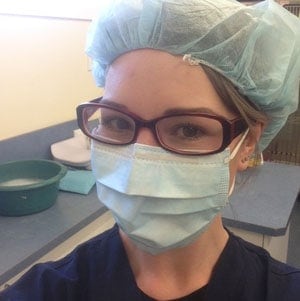
After ten years of unfulfilling retail jobs, I finally took the plunge and enrolled to study vet nursing and haven’t looked back since! The ACVN support network is fantastic! The educators and students are always there to give advice and support, so it never really feels like I am on my own. Studying online especially, pushes me to be more proactive about my education and I think my clinic recognises this and appreciates my dedication to learn.

Single mum, mature student (47 yrs old) with two beautiful teenage children. I have always wanted to be a Vet nurse but was squeamish with blood, etc. but after having two kids I “toughened up”. During my studies I have worked in a specialty clinic, and emergency clinic and have finally found my home in general practice which I love. My studies have helped me so much, especially being able to confidently train our trainee nurse. It’s been great to have the study notes to refer back to when needed.
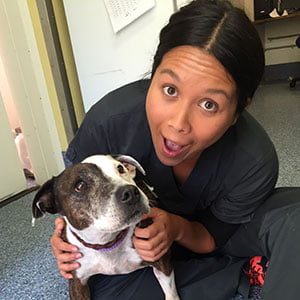
I worked in makeup for fashion and tv for 7 years prior to realising my calling was in the veterinary industry. After researching my options my heart was set on ACVN. I like how in depth each unit is knowing that I am learning absolutely everything I need to take away to become the best vet nurse I can be for my patients. The amazing support and help from the nurse educators really makes a huge difference in the whole experience as well.
WE WELCOME OVERSEAS STUDENTS
You don’t need to be living in Australia to study with us. We welcome students from all over the world onto our Diploma of Clinical Veterinary Nursing which you can also be awarded a ACM40418 Certificate IV in Veterinary Nursing upon graduation.
You have the same student benefits as a local student, and we don’t charge you huge fees for being overseas. There are however, some considerations you need to factor in before enrolling with us. Please read the Overseas Student Information by clicking the button below.
Learn more
download a brochure
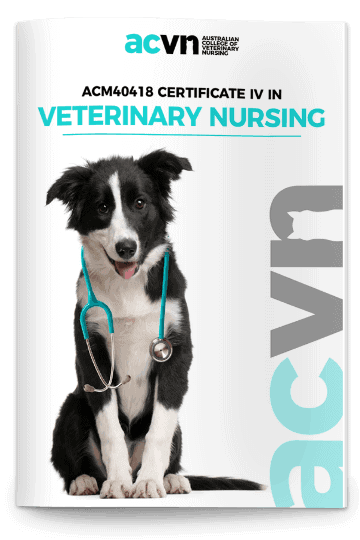
COMPLETE THIS QUICK FORM AND WE’LL SEND YOU THE BROCHURE
ALONG WITH SOME INFO TO HELP YOU DECIDE IF THIS COURSE IS FOR YOU.